
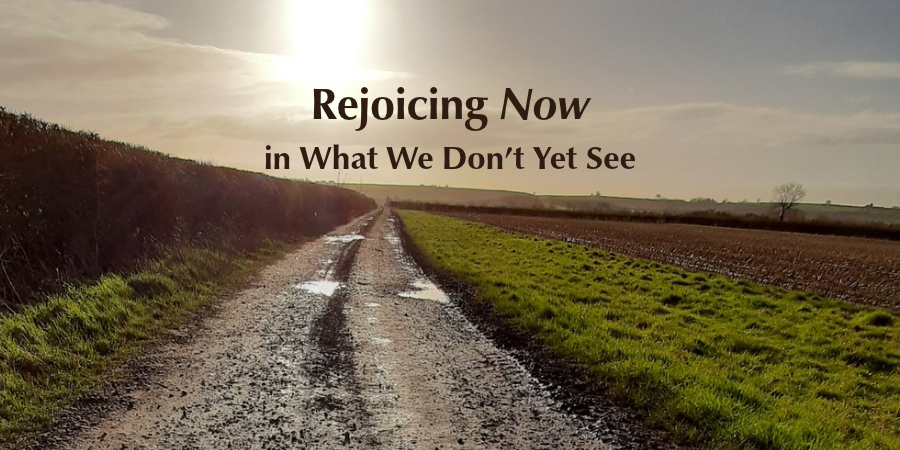
Think about the things you see that bring you joy. Maybe a breathtaking sunset, authentic worship, inspiring art, children laughing, selfless giving, or love in action. It’s easy to rejoice in what we do see. It’s almost instinctive. Yet rejoicing in what we don’t yet see? That doesn’t happen as naturally. In fact, it requires a whole new way of seeing. And it’s precisely this kind of sight that Scripture invites us into.
Though you do not see him now…you rejoice with a glorious, inexpressible joy.” 1 Peter 1:8 (NLT)
The apostle Peter wrote these words to encourage Christ-followers facing severe challenges for their faith. The truth is choosing to follow Jesus isn’t always easy, and Jesus was clear in saying it wouldn’t be (John 16:33). This is why Peter reminded these early believers, as he does us today, to look beyond our present circumstances to the future fulfillment of God’s promises. Only by making this choice are we able to connect to godly joy, regardless of circumstances.
What This Doesn’t Mean—What It Does Require
Choosing to rejoice in what we don’t yet see doesn’t mean denying what we do. The world can be a hard and hurtful place. Acknowledging this doesn’t make us faithless or pessimistic, only honest.
At the same time, seeing this way does ask something of us. It requires intentionality, spiritual discipline, and a commitment to meditate on God’s Word. When we lean into these rhythms, our present reality is shaped by the truth and promises of Scripture, equipping us to see what God says.
Seeing the Not Yet in Scripture
Seeing this way isn’t unique to Peter or to early Christians. In fact, Scripture speaks of many believers who chose to anchor their joy in God’s future promises rather than what they could see in the present.
The faithful heroes in Hebrews 11 died without seeing the fulfillment of God's promises, but "welcomed them from a distance" (Hebrews 11:13). The prophet Habakkuk acknowledged barren vines and chose to rejoice in God's faithfulness (Habakkuk 3:18). Paul echoed this same mindset, encouraging believers to shift their gaze from the seen to the unseen (2 Corinthians 4:18). Yet ultimately, it was Jesus who modeled this perfectly by choosing to see future joy on the other side of the crucifixion (Hebrews 12:2).
A Word About This Kind of Sight
I understand this kind of sight might seem like blind optimism, wishful thinking, or positivity, but I assure you, it’s none of these things. Instead, it’s a deliberate, daily decision to view our current reality through a faith-filled lens—trusting the truth of Scripture and the wisdom of the Spirit over what our eyes can see in the present.
And the good news? This kind of sight isn’t reserved for a select few. It’s available to us all. Yet it does require a choice. The choice to see what God says, even when we can’t yet see it and the choice to rejoice in advance for all He has promised.
Pray
Father God, sometimes I focus on my present challenges and lose sight of Your future promises. Each time I do, my joy is depleted, and my hope runs low. I don’t want this to be true of me, and I know it doesn’t have to be. Please empower me by Your Spirit to look intently into Your Word, knowing it never fails and always comes to pass. Help me to rejoice now in what I cannot yet see, trusting that You are good and faithful. Amen.
Reflect
What present circumstance is blocking your view of God's promises? How might viewing it through the lens of Scripture help you see more clearly?
My friends, your thoughts matter! I’d love to hear from you. Consider sharing your responses in the comment section below!